Showing posts with label isopods. Show all posts

Sunday, May 1, 2016

REORGANIZING THE TREE OF LIFE

THE MAJOR STEP NEEDED

The major line of animal evolution, known as deuterostomes and including chordates, hemichordates, and echinoderms, needs  to be recognized as having its origin in the early annelid worms via a group of polychaetes now called pogonophorans.  This recognizes the longer evolutionary history of protostomes.  It also sets aside changes made by the proposals of Lophotrochozoa and Ecdysozoa as significant groups of animals; the post of May 31, 2013 explains why they should be dismissed.

[Engemann's] Modification of the Annelid Theory of Chordate Origin

If you have read the recent posts of this blog, starting with SCIENCE PREJUDICE on March 17, 2016, you will understand why I didn’t say “The Creator’s Use of Annelids to Make Humans”.  My data driven conclusions leading to understanding of the evolutionary sequence of events involved do not discredit God by presenting it as a scientifically credible theory.  That is especially true because the multiple lines of evidence were unlikely to have been discovered by my feeble efforts.  I say the same thing about Darwin’s work on developing the Theory of Natural Selection underpinning our understanding of evolution.  I hope I will not withdraw recognition of the Creator’s role as Darwin may have done.  Maybe I should just say “Modified Annelid Theory of Chordate Origin”.

The lines of evidence

First, the observation of inverted systems, noted for annelids as compared to chordates, was responsible for the original proposal of annelid origin over a century ago.

Second, observations that evolution can occur in developmental stages independent of adult features.  This has been known for a long time without perception of its significance.

Third, evolutionary rates at the abyssal depths of the ocean can be so slow it makes molecular clocks for determining evolutionary rates in different branches of the tree of life almost meaningless.  Some evidence of it being known in 1915 exists*, but who would realize the importance of nothing happening?

Fourth, conditions in the abyssal depths were the driving force for natural selection to bring about the deuterostome embryological features from the original protostome annelid embryological features.

Fifth, the Pogonophora, unknown at the time of the original annelid theory, embed the major evidence of intermediate linking features.

Where is the evidence?

First, the inversion is illustrated in the post of March 2, 2015.  The concept was discussed in the June 28, 2013 post.

Second, this fact of some independent evolution of embryonic features is generally accepted since the “Biogenetic Law” was discredited.  I was impressed by the existence of an egg appendage (post of June 5, 2014) not found on more primitive isopods (post of June 6, 2014) illustrating the concept.

Third, factors responsible for the slow rate have accumulated but have not been linked with the remarkable longevity I have shown must exist, beginning with the evidence the pogonophorans present (Posted on October 24, 2015) discussed in the post of Jun 9, 2014 and illustrated in the post of June 13, 2014.

Fourth, a number of research reports have demonstrated the slowing of metabolic rates with depth in the ocean.  Some references are given in the post of June 22, 2013.  When data is limited some have assumed the ages of organisms fell at the lower end of the predicted range of error.  Isopod egg features noted in other posts apply to understanding the cleavage change (protostome to deuterostome type via pogonophorans) due to reduced egg membrane constriction as a possible selective force.

Fifth, the pogonophorans show a number of features intermediate between annelids and chordates noted in some of the posts referenced above and in the post of October 24, 2015.  Their importance is made clearer by their critical role in life surviving extinction events as discussed in my post on May 11, 2013.

The tree of life, revised

A simple correction for the tree of life is to leave the entire protostome line intact (from the version before the Lophotrochozoa/Ecdysozoa errors) and graft the deuterostome (or chordate) line on to the Pogonophora/Polychaeta basal group of the Annelida.  Echinoderms and perhaps some lophophorates may have ancestry among other pogonophorans than those leading to the chordate line.
*Brooks, William Keith.  1915.  The Foundations of Biology.  Columbia Univ. Press, New York.  339 pp.  He comments on - the unchanging nature of Lingula (page 219), and p. 217 “the diversity of the Lower Cambrian fauna and of its intimate relation to the fauna on the bottom of the modern ocean”.

Joseph G. Engemann   Kalamazoo, Michigan    May 1, 2016

Friday, January 23, 2015

SALVAGING DATA FOR EVOLUTION STUDIES

MOLECULAR DATA

It occurred to me within the past day that I have ignored one of the things I learned in my youth - how to get some use out of discarded materials in the city dump!

Such experiences were something few children in modern cities get.  So many of the products we use are not designed to be repaired, just throw the whole thing away and get a new one, or at best, get a module to replace a portion.

So my criticism of the Ecdysozoa and Lophotrochozoa studies [post of May 31, 2013] overlooked the fact that, if the errors introduced by linking most ancient ancestors were taken in to consideration, and some such ancestors were omitted in a new analysis, the remaining data might lead us closer to the reality of the ancestral paths.  Even so, the inadequate sample sizes and the limited portion of the genomes examined are unlikely to be very useful.

I don't think it is worth trying because the sample sizes were already inadequate and might still be if clusters could be reanalyzed omitting the nematodes in the Ecdysozoa study.  Nematodes need omission not only because they may have extreme retention of genomic identity giving them "long-branch attraction" to diverse distantly related groups, but they also are a separate lineage that is not basal to any other major modern group.

The Lophotrochozoa represent newer evolutionary events.  Because uncertainty due to variable length of lineages from common ancestry of early coelomate animals, and the "long-branch attraction" problem affecting some of the members descended from annelids via the Pogonophora, the relationship of various "lophophorate" clusters can not be determined with simple corrections.

EMBRYOLOGICAL DATA

As discussed in my posts regarding isopod egg comparisons it is clear that the old idea of the "biogenetic law" where animals were thought to repeat some steps of their evolutionary development in their individual embryonic development is not valid.  But I hope I made it clear that the concept is still a useful model that may suggest investigation for support from other evidence.

The isopod eggs, and ecological factors involved in deep-sea selection, helped me see how the Pogonophora explain the close relationship of ancestry of deuterostomes to advanced protostomes.  Judging from the number of views of my blogs on the topics, I think people studying such things are unlikely to know about them and thus will be unable to apply the concepts.

ANATOMICAL DATA

Amazing data can be found in studies of anatomy.  But it is increasingly unlikely to be helpful, not because it can't be, but because modern researchers are swamped with so much useful information they will never get far into older studies and approaches.  Anatomy and its changes not only reflect evolutionary history but are intimately connected with the genomes of animals.

The environment imprints it natural selection role on structure, development, and the responsible genes.  But the complex interaction is so nebulous I pity the researchers of today who are certainly more technically advanced than I have ever been.  The day is not long enough, nor their life long enough, to have much chance of putting it all together.  Still, I anticipate the continuation of the string of remarkable advances science can make in many areas.  I hope they can still get the benefits study of the humanities can make in their lives.

Joseph G. Engemann    Kalamazoo, Michigan    January 23, 2015

Monday, June 9, 2014

VARIABLE RATES OF EVOLUTION

THE RATES OF EVOLUTION OF THE ISOPODS

Michigan vs. Tasmanian isopod rates of evolution

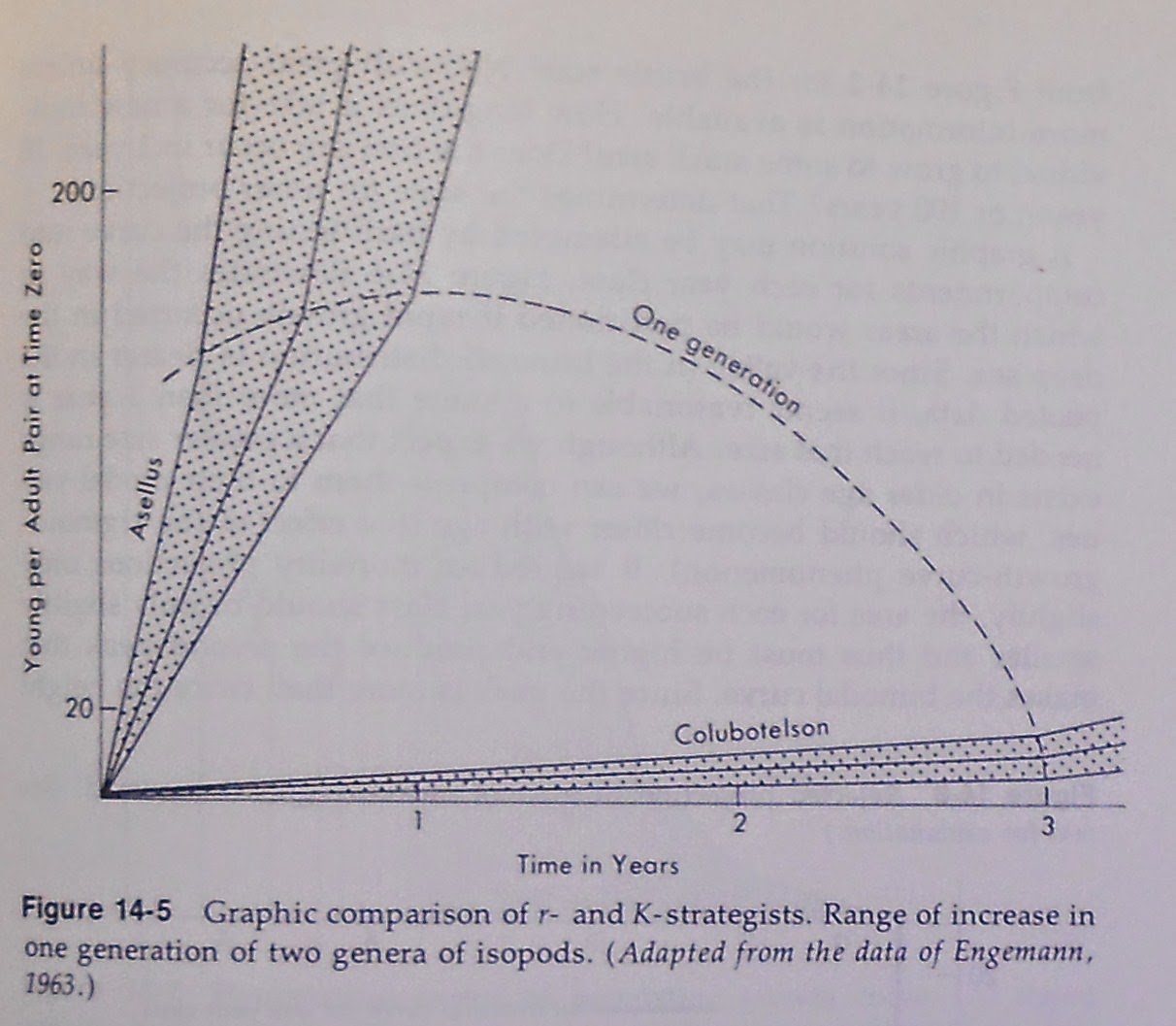
The Michigan isopod (posted 6/5/2014) with the egg appendage was able to complete two generations per year.
The Tasmanian isopod  (posted 6/1/2014) took three years to complete a generation.

Since generation time is a reasonable measure of potential evolutionary rates, there is a six-fold difference in the potential rate of change from the ancestral type between the two groups.  Thus it is reasonable to expect the Tasmanian ones have greater similarity to the common ancestor of the two groups.  The greater change in the Michigan one was reflected in the flattening of the group, the fusion of abdominal segments of the upper surface of the exoskeleton, and the development of appendages on the egg; these changes do not appear to be evident in the mostly likely ancestral types of crustaceans.

Potential rates of change are just that, potential.  Selection may keep a well-adapted set of species characteristics relatively unchanged for a longer time than expected.  In such a case, molecular changes may occur in DNA sites not readily affected by selection and thus be a better gauge of time of separation from ancestral types than indicated by unchanged anatomical features.

In ten generations, if x were the numbers of nucleotide changes per generation, the Tasmanian one could have accumulated 10x number of changes and the Michigan one 60x number of changes.  Changes to 100% of the genome would take six times longer in the slowest, so more species could be expected to develop in one with a shorter generation time, if rate of potential change were the only operative factor.

SPECIATION CONSEQUENCES OF LONG GENERATION TIME

Speciation, or development of new species, is usually thought to require geographic isolation from the ancestral type.  Species are sometimes defined as having reproductive isolation from each other.  Geographic isolation can make interbreeding impossible and has been a major factor in evolution.  But isopods having a three year generation could have three species going separate evolutionary paths in the same location.  I wondered if it may have been a factor in the presence of multiple species of similar isopods in Great Lake in the central highlands of Tasmania.  I was not able to determine that although Nicholls listed several species from Great Lake.

Cicadas, some species of which have 17-year life cycles, have developed identifiable differences in some different year-class broods found in the same location.  Speciation may have occurred in some invertebrates of the seashore based on different breeding times during the same year by selection differing at the beginning and end of the breeding season, along with higher predation on early life stages  by predators focused on the peak at the middle of the breeding season..

In addition to geographic and temporal isolation insects are spectacular in their diversity that is a result in part of rapidly gaining reproductive isolation due to specification of genetalia modifications often referred to as a "lock and key" arrangement.  As a result hybridization is prevented once genital differences are sufficient.  Insects may also be reproductively isolated by life on different- host plants or animals, or with pheromones, behavior, and microhabitat differences.

WHY DOES LONG GENERATION TIME OCCUR?

I wondered why such long generation time occurred in the Tasmanian isopods.  As a result I became sensitive to the causes of long generation time.  That followed me long after studying isopods.  I had concluded that the rapid input of much nutrients enabled Michigan isopods to specialize for rapid life cycle, with quick growth and the ability to produce many eggs to capitalize on the period of abundant food.  At the same time it enabled them to persist in the presence of high levels of predation.  So I was familiar with the biology of r- and K- selection before R. H. MacArthur and E. O. Wilson were first to write about it in such publications as their book, The Theory of Island Biogeography (1967).  Their elaboration was a valuable contribution to better understanding of the impact of ecology on evolution.


Long life, infrequent and delayed reproduction, low reproductive rates, low food supply, absence of or low predation and/or ways of avoiding predation, and slow development are all associated with K-selected extremes in the biology of a species.  Within the same habitat it is possible to have both extremes represented as in the example of the cicada with a dozen or more years needed to complete its life cycle while another heteropteran insect, the aphid, can have many generations per year.  Large size usually is accompanied by long generation time, but not always.

WHERE THE ABOVE LED ME

As a result of this interest in longevity, I was prepared in advance to recognize the extreme length of life of the pogonophorans.  Their slow evolution and ancestral role were also able to be seen due to that and the knowledge of invertebrates partially acquired by revising Hegner's Invertebrate Zoology text for its 1968 edition.  A continuing interest in animal evolution led me to recognize some of the errors infecting it now as shown in the post of May 31, 2013.

Joseph G. Engemann      June 9, 2014